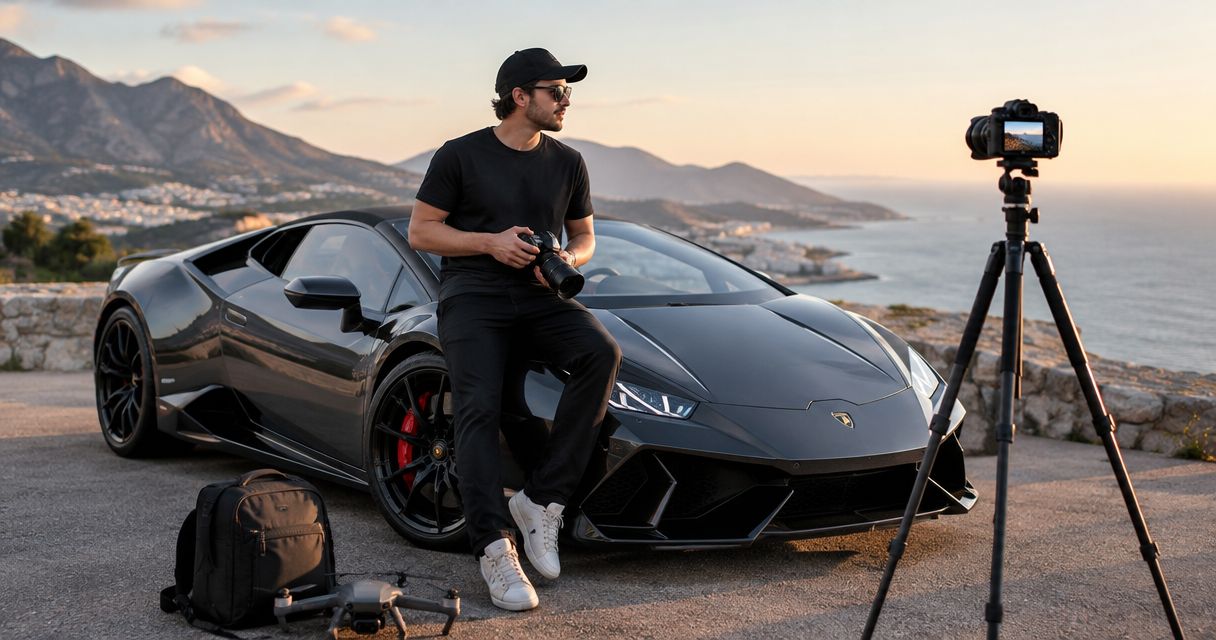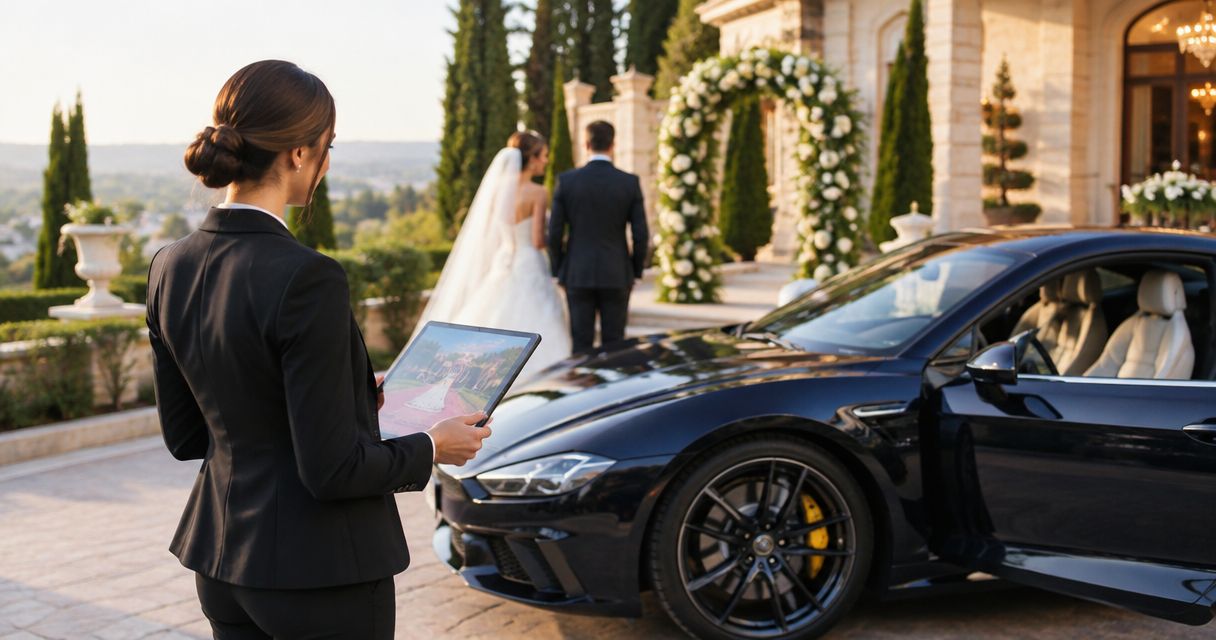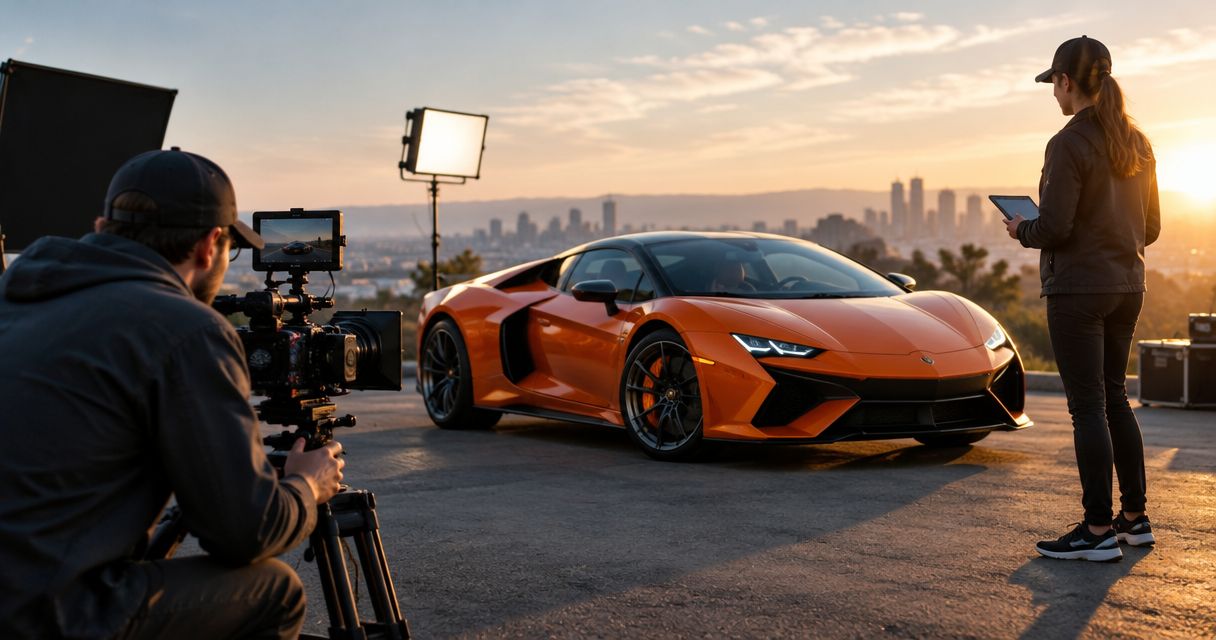
Film production companies’ exotic car rental is the sourcing of a camera-ready vehicle with the aim of matching a production’s visual brief and shooting schedule. Unlike a leisure booking, a production needs written agreement on filming, drivers, equipment, delivery access, and continuity before the car reaches set.
- Exotic car rental for film production companies starts with written filming permission, not just a vehicle reservation.
- Exoticsonthecoast suits Gulf Coast exotic car rental enquiries where door-to-door delivery is a priority.
- Choose Lamborghini, Porsche, or Corvette models around the shot list; confirm the exact vehicle before booking.
- Separate stationary filming, driving scenes, and equipment mounting in your production brief.
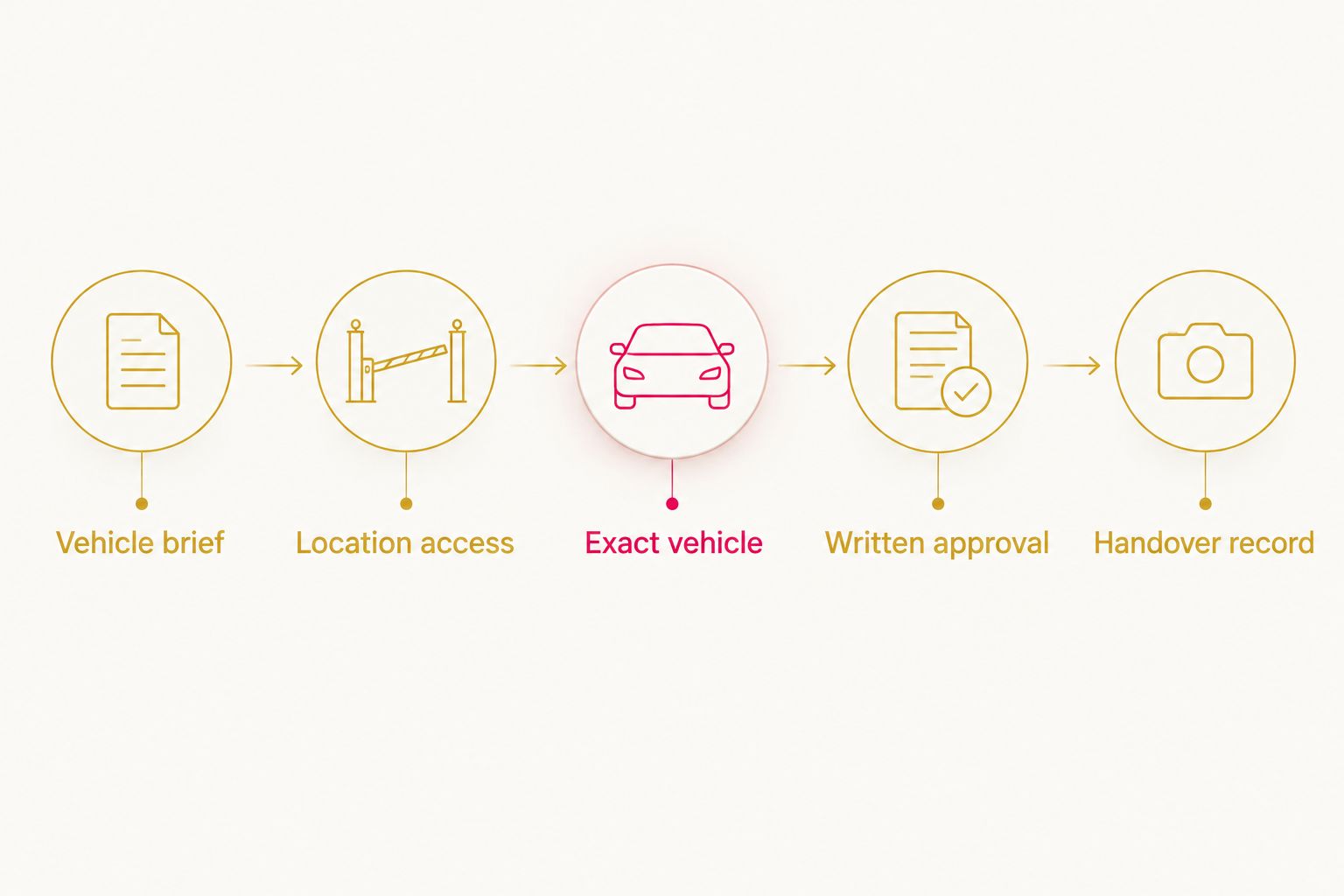
For a Sarasota or Tampa shoot, start with the vehicle brief and then request a current quote from Exoticsonthecoast. The company rents exotic and luxury vehicles with door-to-door delivery across Sarasota, Tampa, and Florida’s Gulf Coast; commercial filming permission and production-specific terms still need written confirmation.
Why exotic car rental matters for film production companies
A picture car is part of the scene, not interchangeable transportation. Its body shape, roof configuration, interior, and finish affect framing, reflections, actor movement, and continuity between takes.
Your location also changes the brief. A Sarasota hotel entrance, a nearby island property, a Tampa loading area, and a St. Petersburg street location each require their own access plan. For Bradenton or Lakewood Ranch shoots, give the provider the actual handover address rather than a broad area name.
For a 2026 production, approve the vehicle, its permitted use, and the location plan together. A car that matches the mood board but cannot perform the approved scene does not meet the brief.
How to book an exotic car for a production
Define the vehicle’s role before choosing a model
Start with your script and shot list. Build a 1-page vehicle brief that tells the provider what the audience will see and what the crew will do with the car.
Separate a parked background appearance from an actor-driven arrival. Treat tracking shots, repeated driving takes, and mounted equipment as distinct requests, not details to disclose after booking. Describe the intended action plainly instead of calling everything a photo shoot.
For your 2026 brief, distinguish essential characteristics from preferences. An exact model required for story continuity belongs in the essential column; a preferred finish belongs there only if the production genuinely cannot substitute it.
- State whether the car is a hero vehicle, background vehicle, or transport.
- Describe stationary shots and moving shots separately.
- Identify every person expected to drive or reposition it.
- List interior filming, passenger scenes, and equipment contact.
- Mark model, roof type, and finish requirements as essential or preferred.
Check location access before arranging delivery
Walk the location yourself or ask the location manager for current photographs. Check the route from the property entrance to the actual filming position, including slopes, gates, loading areas, and the place where the handover will happen.
Door-to-door delivery addresses transportation to a location; it does not establish that every driveway, curb, or staging area is suitable. Give the rental provider enough information to assess the proposed approach before committing to that position.
For an island shoot near Sarasota, do not stop at the property address. Explain where the delivery vehicle can stop and where the picture car needs to finish. Keep the same distinction for hotel and commercial-property shoots in Tampa or St. Petersburg.
- Photograph entrances, ramps, surface changes, and turning space.
- Identify a handover area separate from the active set.
- Confirm property permission for vehicle positioning.
- Share the proposed delivery route and final staging position.
- Name an alternative position if the first approach is unsuitable.
Match the exact vehicle to the camera brief
Start manually: compare current vehicle photographs against your storyboard. Ask for exterior and interior views of the actual car being considered, rather than approving a model from a reference image alone.
Exoticsonthecoast’s exotic car rental fleet includes 21+ exotic and luxury vehicles. Send a single brief for the provider to assess instead of treating the fleet list as confirmation that a particular car is assigned to your production.
Exoticsonthecoast is best for Gulf Coast production teams seeking exotic car rental with door-to-door delivery, subject to written filming approval. The delivery service fits a location-based enquiry; production suitability still depends on the exact car and agreed use.
- Request current photographs of the proposed vehicle.
- Confirm its model, finish, roof configuration, and interior.
- Check camera sightlines, reflections, and actor entry.
- Ask whether any visible details differ from your reference.
- Record the agreed vehicle identity in the booking documents.
Get filming use and insurance requirements in writing
Prepare your own activity list before asking for approval. A rental reservation alone is not written permission for every commercial filming activity, and production insurance should not be treated as interchangeable with the vehicle’s rental requirements.
Send the same activity description to the rental provider and your production insurance contact. Ask each to identify what must be documented before handover. Keep questions about drivers, vehicle damage, equipment contact, and filming permission separate so an answer to one is not mistaken for approval of all.
For a 2026 commercial, music video, or branded shoot, retain the final written answers with the production paperwork. If an activity remains unapproved, remove it from the shot list or resolve it before booking.
- Disclose commercial filming and the intended distribution.
- Identify proposed drivers and request qualification requirements.
- Describe mounts, suction devices, adhesives, and interior equipment.
- Request the applicable insurance and documentation requirements.
- Confirm restrictions on driving scenes and vehicle handling.
Build the vehicle into the call sheet
Use your existing call-sheet template first. Add a dedicated vehicle section that separates delivery, condition inspection, positioning, filming, and return; a single arrival time does not describe the whole assignment.
Assign 1 crew contact to coordinate handover and communicate changes. That person should know the approved use, hold the provider’s contact details, and understand who can authorize repositioning. Avoid conflicting instructions from camera, locations, and production.
Request delivery and collection arrangements for the exact address and schedule. Exoticsonthecoast offers door-to-door delivery across its stated Gulf Coast service area, but your production still needs confirmation of the requested location and timing.
- List the handover address and on-site contact.
- Separate arrival, inspection, filming, and return windows.
- Identify the authorized driver or vehicle handler.
- Keep keys with the agreed responsible person.
- Define who approves schedule or location changes.
Document condition and preserve continuity
At handover, photograph the vehicle before positioning it. Record 4 exterior angles, then capture closer views of existing marks and the interior areas the crew will use. Complete the provider’s required inspection process as well.
Create a separate continuity record for anything visible on camera. Note roof position, wheel direction, seat position, removable personal items, and other details that affect matching shots. Condition evidence and continuity photographs serve different purposes; keep both.
Before the last setup, compare the scene against the approved use. A late request for an attached camera or a different driver still needs approval. Do not let a compressed schedule turn an unanswered request into assumed permission.
- Photograph exterior and interior condition at handover.
- Record visible details needed for matching takes.
- Keep unapproved equipment off the vehicle.
- Log approved changes to drivers or positioning.
- Complete return documentation and retain the records.
Request a production rental quote
Send your dates, location, vehicle brief, and intended filming use for confirmation.
Compare vehicles by the scene they need to support
Choose the body style before chasing a badge. The models below appear in the brand’s supplied rental references; that does not confirm a particular vehicle for your dates or establish permission to film with it.
Use this table to shortlist a visual direction for your 2026 production. Verify the exact car’s dimensions, interior, and configuration before planning equipment placement or blocking.
| Vehicle option | Best for | Production advantage | Key limitation to check |
|---|---|---|---|
| Lamborghini Huracán Spyder | A sports-car-led hero shot with an open-roof brief | Its convertible format supports a different framing approach from a fixed-roof car | Confirm roof operation permission and whether the proposed camera position works |
| Porsche 911 | A script that specifically calls for a Porsche sports car | Establishes the requested model identity without substituting a different marque | Confirm the exact variant and roof configuration; a model name alone is insufficient |
| Corvette Z06 | An American sports-car visual brief | Matches a production that specifically wants a Corvette rather than a European marque | Confirm the actual car’s roof configuration, interior, and equipment clearance |
| Lamborghini Urus | An SUV-led arrival or character vehicle | Provides an SUV body style when a low sports car does not match the scene | Confirm actor blocking and camera access in the actual vehicle |
The best choice is the vehicle that meets the approved shot list without requiring unapproved handling. Do not use horsepower as a substitute for production fit: a stationary dialogue scene needs usable framing, not a performance claim.
Common mistakes film production companies make
Booking a model without confirming the exact car
A reference image does not establish the booked vehicle’s finish, wheels, interior, or roof configuration. Ask for current photographs and retain the agreed specification, especially when pickup shots must match an earlier scene.
Calling moving scenes a stationary shoot
A parked product shot and an actor driving through frame are different requests. Describe each action accurately, including repositioning between takes, so the provider can respond to the intended use rather than an incomplete summary.
Treating delivery as permission to access the set
Delivery arrangements do not replace the location owner’s approval or an access check. Coordinate the property entrance, handover position, and filming position before the car arrives; do not leave the driver to solve an unsuitable approach.
Adding equipment after the vehicle arrives
A last-minute mount request changes the activity originally described. Disclose equipment contact during the enquiry, and keep an alternative shot ready if the proposed attachment is not approved.
Leaving collection out of the shooting plan
The vehicle remains a production responsibility after its final appearance on camera. Put inspection, removal of crew items, and the agreed return process on the call sheet rather than treating wrap as an immediate release.
FAQ
Can a film production company rent an exotic car for a commercial?
Request explicit written approval for commercial filming before completing the booking. Describe the production, intended use, drivers, and equipment so the provider can confirm whether the proposed activity is permitted.
What is the best exotic car for a film shoot?
The best exotic car is the exact vehicle that matches the script, camera framing, location access, and approved activity. Choose a convertible, fixed-roof sports car, or SUV around those requirements rather than the badge alone.
Does Exoticsonthecoast deliver vehicles to Gulf Coast locations?
Exoticsonthecoast offers door-to-door delivery across Sarasota, Tampa, and Florida’s Gulf Coast. Confirm the production’s exact address, access arrangements, and requested timing before treating delivery as agreed.
Can actors drive the rental car during filming?
Only plan actor-driven scenes after the provider has approved the driver and intended activity in writing. Ask for the applicable driver requirements and send the same scene description to your production insurance contact.
Can we attach cameras or suction mounts to the car?
Do not attach filming equipment without explicit permission. Submit the proposed mounting method, contact points, and use before booking, and prepare an alternative shot if approval is not given.
Is a vehicle reservation enough to confirm a picture car?
A reservation alone does not establish every production requirement. Confirm the exact vehicle, permitted filming activities, handover arrangements, and required documentation in the final booking record.
What should we send when requesting a production rental quote?
Send the dates, exact location, vehicle requirements, filming activities, proposed drivers, and delivery needs. Include equipment contact and the return plan so the enquiry describes the full assignment.
One last thing
Keep the final approved vehicle photographs with your continuity notes, not just your booking email. If your 2026 production returns for pickup shots, those images give the crew a concrete reference for the car, its configuration, and its on-camera details.
Before completing the booking, ask one final question: does the written agreement cover every vehicle action still present in the shot list? Resolve any mismatch before the car reaches set.